
Key Points
- Widespread granule loss, multiple dents per shingle, or exposed asphalt mat signals replacement territory.
- Colorado insurance companies typically give you one year from the storm date to file claims.
- Most insurers won’t pay for “repairs” after hail damage. It’s usually full replacement or nothing.
- Get a professional inspection within 48 hours of any storm. Waiting lets hidden damage worsen and complicates claims.
You’re looking at your roof after a hailstorm. Maybe you see dents on your metal vents. Maybe your gutters have dings. Or maybe everything looks fine from the ground.
Here’s your real question: Does hail damage mean automatic roof replacement?
The short answer: not always. But in Northern Colorado, where baseball-sized hail is a regular summer threat, the answer is “yes” more often than homeowners expect.
This guide walks you through the decision process. You’ll learn how to identify replacement-level damage, what insurance companies actually cover, and when repair might be an option.
How to Tell If Hail Damage Requires Roof Replacement
Not all hail damage means you need a new roof. Certain types of damage cross the line from “patchable” to “replace it now.”
Replacement-Level Damage: What to Look For
- Widespread granule loss across multiple roof sections. When you see bare spots exposing the black asphalt mat across large areas, the protective layer is gone. The shingles will deteriorate rapidly.
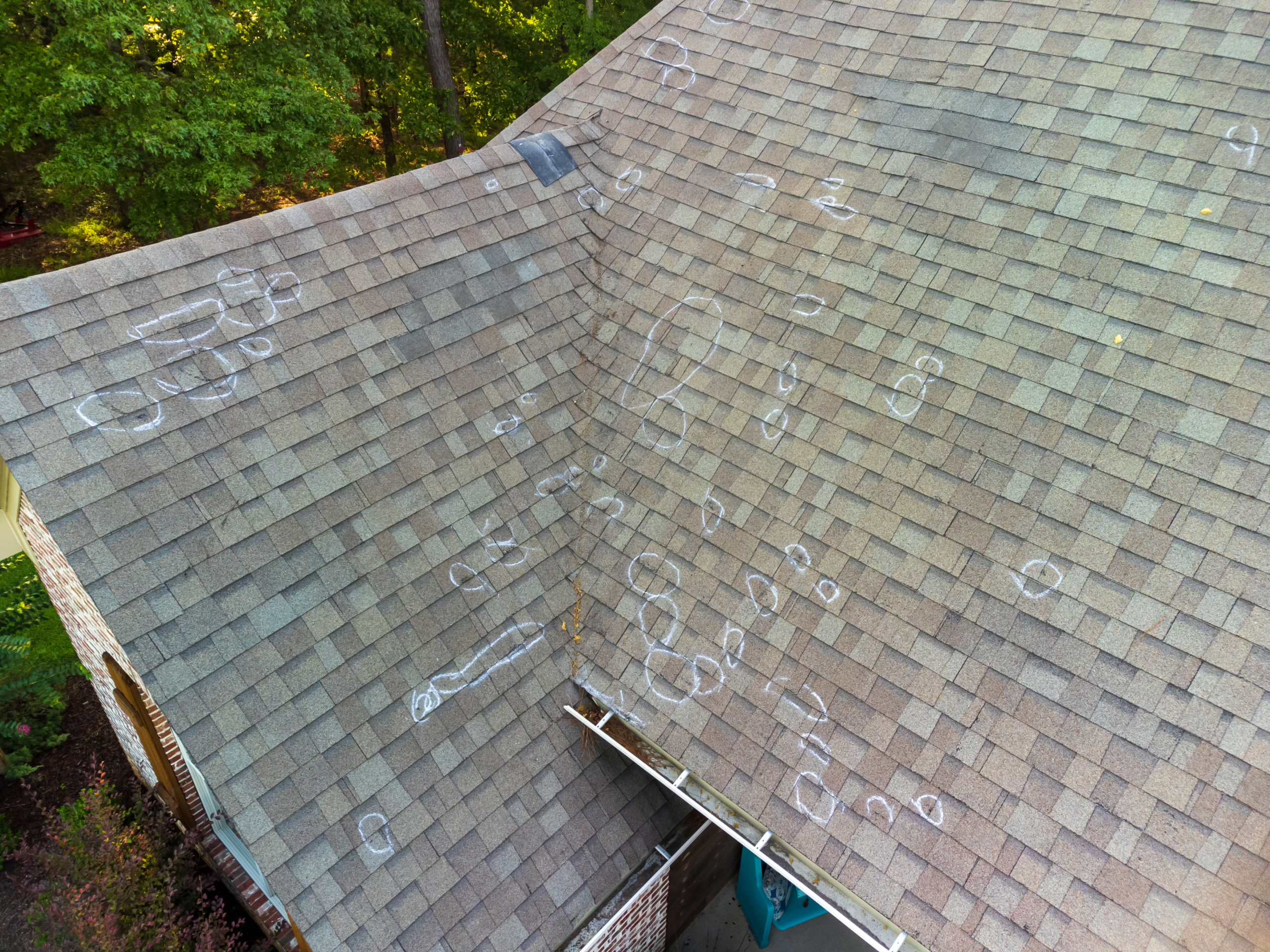
- Multiple impact marks per shingle. When you see 8, 10, or 15+ hits per shingle across the roof, the cumulative damage has shortened the roof’s remaining lifespan dramatically.
- Cracked or split shingles from impact. Direct splits or fractures through the shingle layer allow immediate water penetration. These don’t heal. They spread.
- Dented or damaged roof penetrations. If hail dented metal vents, pipe boots, and flashing, it hit hard enough to damage shingles too, even if shingle damage isn’t immediately visible.
- Bruising that compresses the mat layer. Hail creates circular “bruises” where the impact compresses the fiberglass mat underneath. These weaken shingle integrity and reduce wind resistance.
Damage That Might Not Require Replacement
- Isolated hits in small areas. A few damaged shingles in one spot (under 10 square feet) can often be repaired by replacing just those shingles.
- Cosmetic dents on metal with intact shingles. Sometimes hail dents gutters or vents but doesn’t damage the actual roofing material. Your insurance might not cover purely cosmetic issues, but your roof structure remains sound.
- Minor granule displacement. Light granule loss without exposed mat, scattered across the roof rather than concentrated, might not require immediate replacement if the roof is otherwise young and healthy.
💡 The problem with “wait and see”: Hail damage often isn’t fully visible from the ground. What looks minor can hide serious issues underneath. Colorado insurance policies typically give you only one year from the storm date to file claims.
Schedule Your Free Hail Damage Inspection
After any significant hailstorm, get a professional roof inspection within 48 hours. We’ll document damage for your insurance claim and give you honest answers about repair vs. replacement.
The Repair vs. Replacement Decision Framework
Use this framework to determine your best path forward.
When Replacement Makes Sense
- Your roof is 15+ years old and shows hail damage. Even if damage seems minor, you’re approaching the end of useful life anyway. Replacement now prevents paying for repairs on a roof that needs replacing in 2–3 years regardless.
- Damage covers 25%+ of your roof. Insurance companies rarely approve “partial” roof replacements. If more than a quarter of your roof shows impact damage, you’re in replacement territory.
- You see multiple types of damage. Hail often comes with high winds. If you have both impact damage and wind-lifted shingles, or damaged flashing plus bruised shingles, the cumulative effect requires replacement.
- Your insurance adjuster recommends it. If the adjuster’s scope of work includes full replacement, that’s your signal.
- You’re planning to sell within 2 years. Buyers and their inspectors will note hail damage. Replacing now prevents complications during sale.
When Repair Might Work
- Damage is isolated to one small area. A tree branch fell during the storm and damaged 8–10 shingles in one spot. The rest of the roof is undamaged. Spot repair handles this.
- Your roof is under 5 years old. Young roofs with minor hail damage and strong warranties might qualify for repair rather than replacement.
- You’re managing costs strategically. If your deductible is high (2% of home value) and damage is moderate, the out-of-pocket cost might not justify filing a claim.
⚠️ The repair trap to avoid: Repairing hail damage on a roof that’s already 18+ years old usually means paying twice. You pay for repairs now, then pay again for replacement when the aging roof fails in 1–2 years.
For detailed guidance on when repairs make sense, check our storm damage and insurance claims guide.
What Happens During a Hail Damage Roof Inspection
Professional Inspection
Most local roofing contractors offer free hail damage inspections. Schedule this before contacting your insurance company. You don’t want to file a claim unless you actually have damage.
What inspectors check:
- Shingle condition across all roof planes
- Impact marks, bruising, and granule loss
- Damaged or lifted flashing
- Compromised penetrations (vents, pipes, chimneys)
- Wind damage to shingle edges and ridges
- Attic inspection for water intrusion
The inspection takes 45–90 minutes for most homes. Reputable contractors document findings with photos and measurements.
⚠️ Be wary of “storm chasers”: After major hail events, out-of-town contractors flood the area. Verify Colorado licensing, check local references, and never sign contracts before researching the company.
Insurance Adjuster Inspection
After you file a claim, your insurance company sends an adjuster to assess damage. This typically happens 1–3 weeks after you report the claim.
The adjuster creates a “scope of damages” document listing what the insurance company will pay to repair or replace. This usually arrives 1–2 weeks after their inspection.
What if the Adjuster and Contractor Disagree?
This happens frequently. Your contractor sees more damage than the adjuster documented.
Your contractor should:
- Document discrepancies with photos and measurements
- Contact the adjuster directly with findings
- Request a re-inspection with contractor present
- Supplement the original scope with missing items
Making Your Decision: Replace or Repair?
Here’s a decision tree to guide your choice.
Did hail larger than 1 inch fall on your property?
→ Yes: Continue
→ No: Monitor for damage but replacement unlikely
Do you see visible damage from the ground?
→ Yes: Schedule professional inspection immediately
→ No: Schedule inspection anyway (damage often hides)
Is your roof 15+ years old?
→ Yes: Strong candidate for replacement if any damage exists
→ No: Continue evaluation
Does damage cover 25%+ of your roof?
→ Yes: Replacement likely necessary
→ No: Continue evaluation
Do multiple shingles show 8+ impact marks each?
→ Yes: Replacement likely necessary
→ No: Repair might be viable
Is your deductible less than 20% of estimated replacement cost?
→ Yes: Filing claim probably makes financial sense
→ No: Consider paying for repairs without insurance
💡 When in doubt, get multiple professional opinions. Schedule inspections with 2–3 local contractors. If all recommend replacement, that’s your answer.
Why Northern Colorado Homeowners Choose On Target Roofing
On Target Roofing has served Larimer County through hundreds of hailstorms. We understand the unique challenges Northern Colorado weather creates.
What sets our hail damage service apart:
- Free inspections with detailed photo documentation. We provide the evidence you need for insurance claims.
- Direct insurance company coordination. We communicate with adjusters, document discrepancies, and supplement scopes when needed.
- Local expertise and availability. We’re not storm chasers who disappear. We’re here year-round.
- Class 4 impact-resistant installations. When we replace hail-damaged roofs, we install materials designed to withstand Colorado’s severe weather.
- Honest assessments. If your damage doesn’t warrant replacement, we’ll tell you.
For more information about our storm damage services and insurance claim support, visit our dedicated hail damage page.
Next Steps: Get Your Roof Inspected
If hail hit your area in the past year, don’t wait for leaks to appear. Schedule a professional inspection now.
Here’s what to do:
- Document the storm. Note the date, approximate hail size, and any visible damage.
- Schedule a professional inspection. Get at least one free inspection from a reputable local contractor.
- Review your insurance policy. Check your deductible amount, coverage type (RCV vs. ACV), and filing deadlines.
- File your claim if damage exists. Contact your insurance company within the required timeframe.
- Get multiple contractor estimates. Once your adjuster completes their inspection, obtain quotes from 2–3 contractors.
For immediate assistance with hail damage assessment or questions about roof replacement options, contact On Target Roofing.